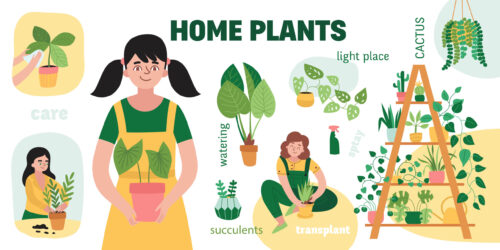
You probably learnt these in primary school but often in real-life situation, we struggle with ensuring the right conditions for our plants. The 4 components, namely AIR, WATER, LIGHT and SOIL, are not just one-size-fit-for-all.
Ventilation is KEY.
Plants need to be in a location where there is airflow.
It helps to reduce chances of fungal diseases and pests.
Talk to your plants often for CO2 intake.
Water is critical for germination.
Keep sowed seeds constantly moist.
Watering should be done in the morning or evening; avoid mid-day watering.
Before deciding what plants to grow, it is important to assess the lighting of your gardening space.
Does your garden receive full-day sun, morning or afternoon sun only, or none at all?
Different plants grow best under different lighting conditions.
Soil is a mix of minerals, organic matter, air, water and organisms which all together support life.
It can be natural or man-made soil.
Different plants need different types of soil for rooting and nutrient-intake.
Soil meter
This can be used to gauge the moisture of soil and light intensity surrounding your plants.
Water Assessment
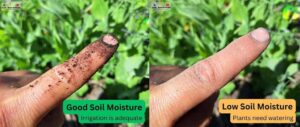
Checking Soil Moisture: Touch Method
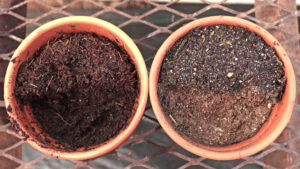
Checking Soil Moisture: Visual Check
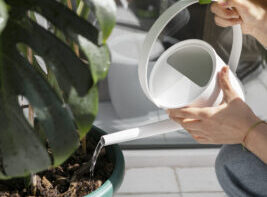
Watering Method: Top-down
This technique is simply watering the exposed soil in the planter from the top.
Watering should be done straight into the soil for root intake as plants drink water through the roots, and not through its leaves!
Avoid watering during hot sunny or mid-day to prevent rapid evaporation of water droplets and leaf burn.
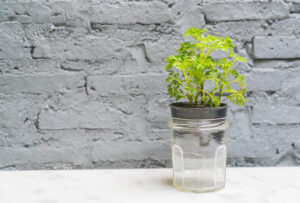
Watering Method: Bottom-up
The soil will gradually absorb water through the drainage holes.
It reduces risk of oversaturation.
Light Assessment
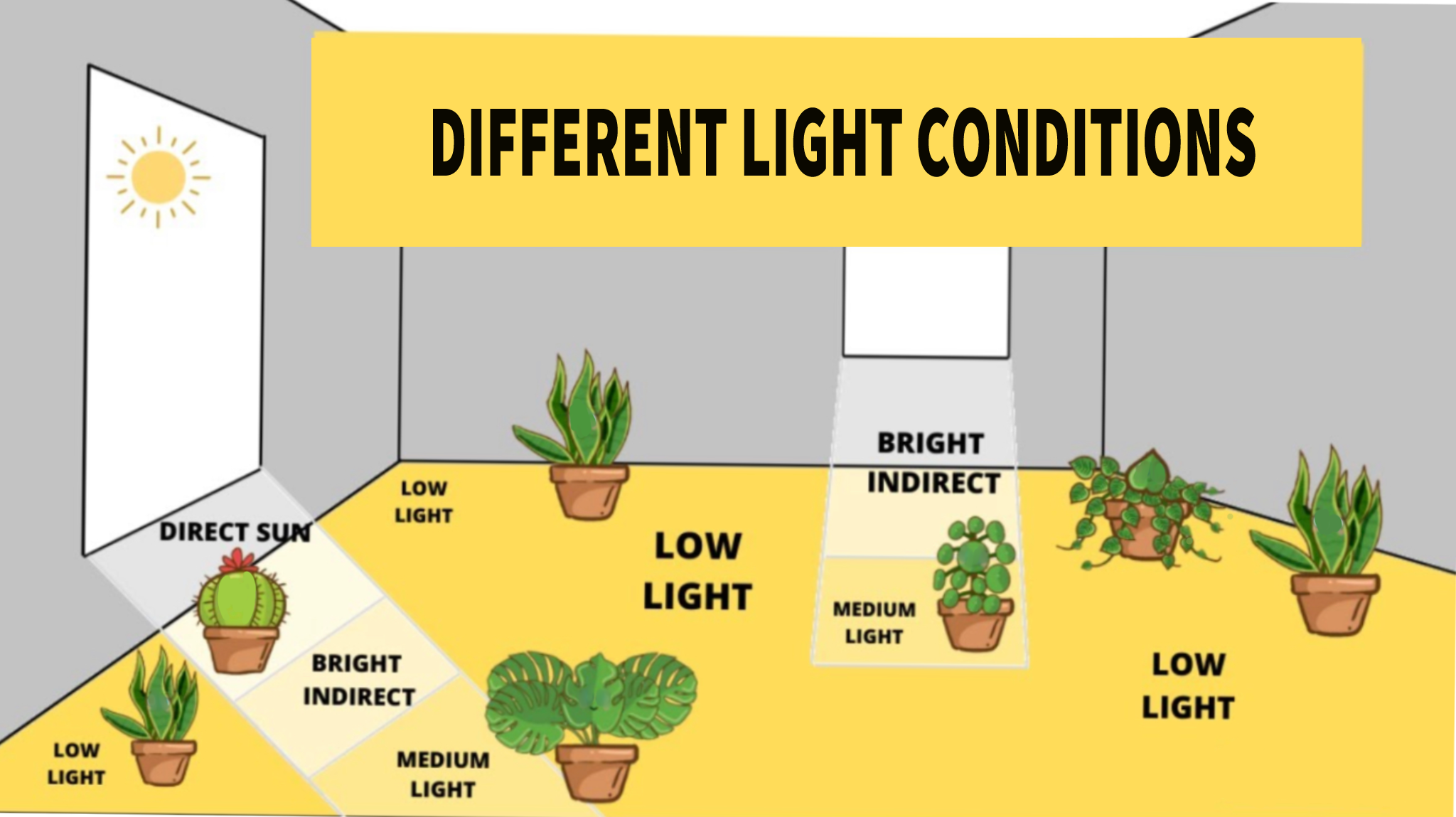
Doing a Hand Shadow Test
While checking throughout the course of the day is best, you can make a quick check in the middle of the day using your hand.
Place a sheet of paper in the spot you intend to position your plant and hold your hand about 30 cm above it and observe the shadow.
If your hand casts a sharp, well-defined shadow, it’s a bright-light spot; if the shadow is clearly a hand but a bit fuzzy, it’s medium; and if it’s faint and hard to make out the outline, then it’s low light.
Best Edible Plants to Grow Under Different Light Conditions
Less Light
Leafy green vegetables, such as lettuce, pak choi, kangkong, sweet potato leaves and spinach have low light requirements, and will grow in part shade, dappled sun, or in shaded locations which only receive 3-4 hours of direct sun a day.
Medium Light
Most herbs, especially the aromatic ones with woody stems, need 6-8 hours of full, unobstructed, direct sun each day.
Some herbs can grow in part shade, with less hours of direct sun. They can also tolerate dappled shade, where sunlight is filtered through tree foliage, and isn’t as intense.
More Light
Vegetables which flower and fruit, such as beans, chillies, cucumbers, eggplants, melons, tomatoes well as broccoli and cauliflower, which are the only vegetables that are flowers (the edible parts are referred to as florets). have high light requirements and need a minimum of 6 hours of direct sun (full sun) a day
Types of Soil
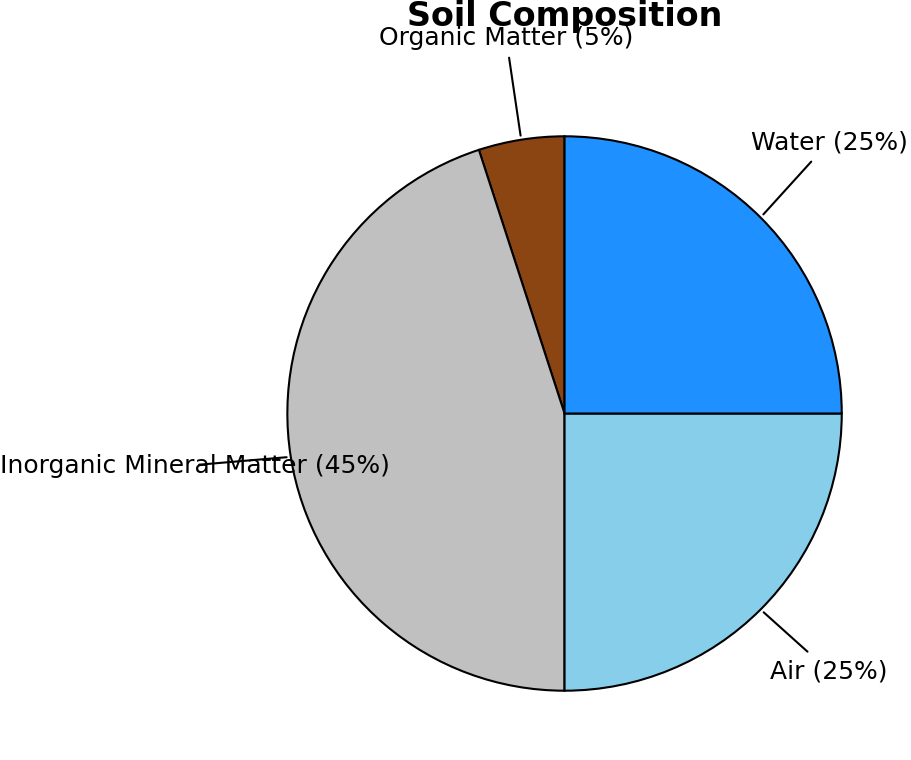
What is SOIL?
It can be formed naturally or be man-made.
Organic matter is anything that comes from living things and their waste. Whereas inorganic matter is mineral particles like sand, silt or clay.
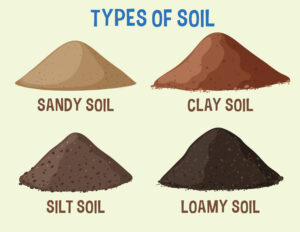
Sand is the least compact, followed by silt, and then clay. Clayey soil retains water very well.
Different plants thrive in different types of soil.
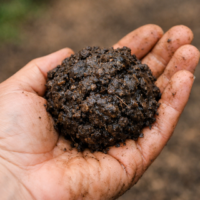
Loamy Soil
Most plants thrives in loamy soil which combines the best attributes of clay, sand, and silt, which promotes healthy root growth and nutrient absorption for plants.
To ascertain if your soil is loamy, try the simple squeeze test: take a handful of damp soil, form it into a ball, and then gently squeeze—if it holds its shape yet crumbles easily when poked, you are in the presence of loamy soil.
If you do not have naturally suitable soil in your garden, you can add a combination of the amendments to improve it. Tell me more…